The imperial court moved to Heian-kyo in 794, and Kyoto remained Japan's capital for over 1,000 years. UNESCO inscribed the Historic Monuments of Ancient Kyoto in 1994, comprising 17 locations: 13 Buddhist temples, three Shinto shrines, and one castle. Kyoto is home to about 1.5 million residents while receiving on the order of 50 million visitors a year, a Japan National Tourism Organization estimate that moves with time.
Kinkaku-ji, the Golden Pavilion
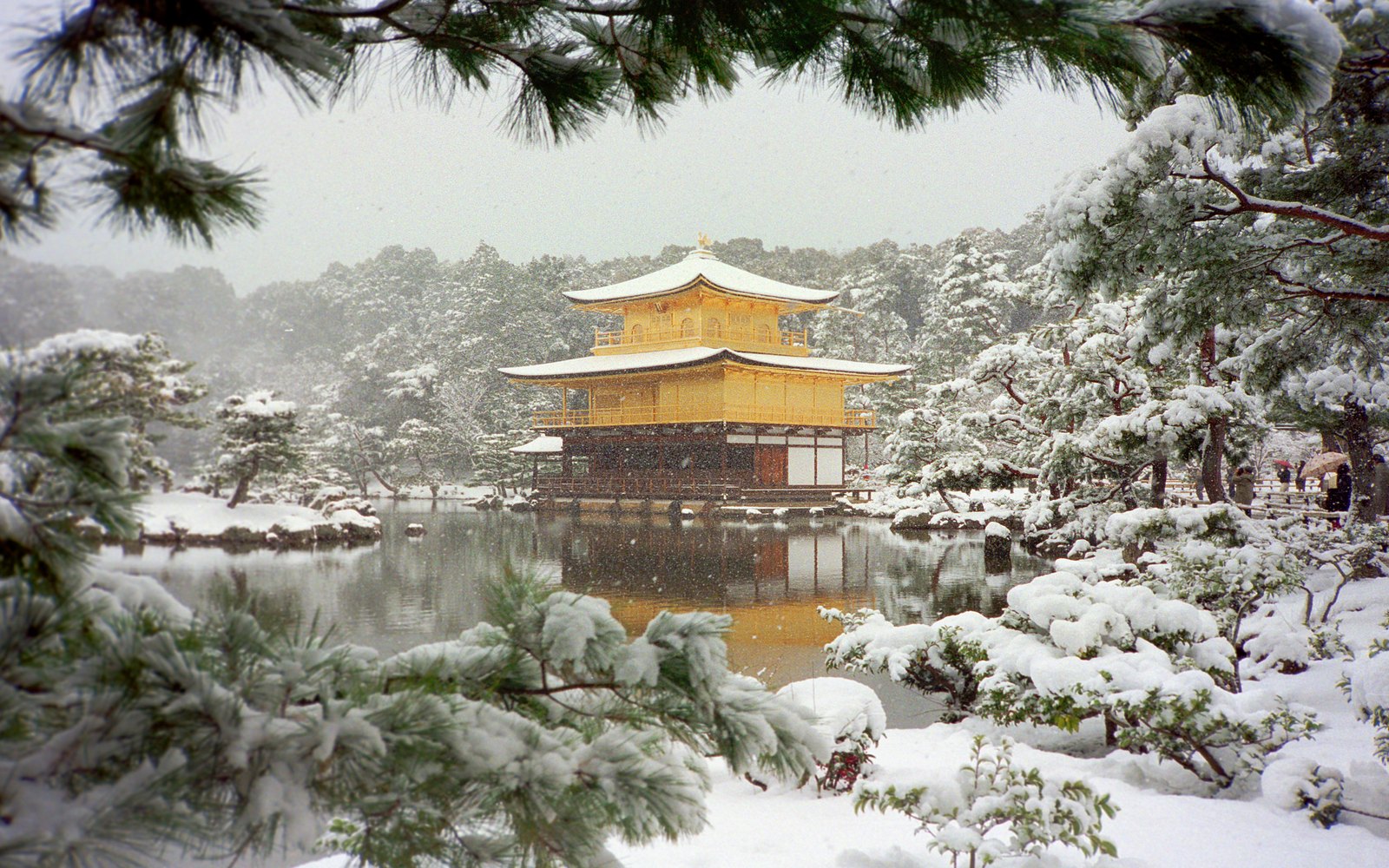
Kinkaku-ji, formally Rokuon-ji, is a Zen temple whose upper two storeys are covered in gold leaf. The shogun Ashikaga Yoshimitsu bought the estate in 1397 for his retirement villa, and it was converted into a temple after his death. The present pavilion is a 1950s reconstruction, rebuilt after the pavilion was destroyed by arson in 1950. Photographed here after snowfall, the temple is at its most striking in winter, when Kyoto's crowds thin and the ryokan season is at its quietest.
HOSHINOYA Kyoto
In Arashiyama on the Oi River, HOSHINOYA Kyoto is a 25-room luxury ryokan opened in December 2009 in century-old former villa buildings. It is reached only by private boat from near Togetsukyo Bridge, and every room faces the river. The property received the Michelin Guide Kyoto/Osaka's highest accommodation rank, 5 Red Pavilions, for six consecutive years through the 2018 edition. Arashiyama has been favored as a nature retreat since the era of Japan's first emperors, and this stretch of the Oi River was once the vacation ground of Heian aristocrats.
Tawaraya Ryokan
In central Kyoto, Tawaraya Ryokan has practiced its art of hospitality over three centuries and 11 generations. It has just 18 rooms, maintains no official website, and takes reservations by telephone or fax only. Past guests include filmmaker Alfred Hitchcock; all 18 rooms face inward onto private contemplation gardens. There is no published rate card, and none is quoted here.
Getting there
The fastest Shinkansen from Tokyo Station reaches Kyoto in about 2 hours and 20 minutes. The JR Haruka Express runs from Kansai International Airport to Kyoto Station in about 1 hour and 15 minutes. Kyoto Station sits on the Tokaido Shinkansen line, which makes the city the natural first or last stop of any Japan itinerary.
Photography: Fg2, via Wikimedia Commons (public domain)